
- Mental tension or worry
- Physical symptoms such as tightness or restlessness
- Difficulty relaxing
- Changes in sleep or focus
Because the experiences overlap, many people aren’t sure whether they’re dealing with temporary stress or ongoing anxiety.
Finding Clarity...

Many people feel overwhelmed, tense, or on edge and wonder:
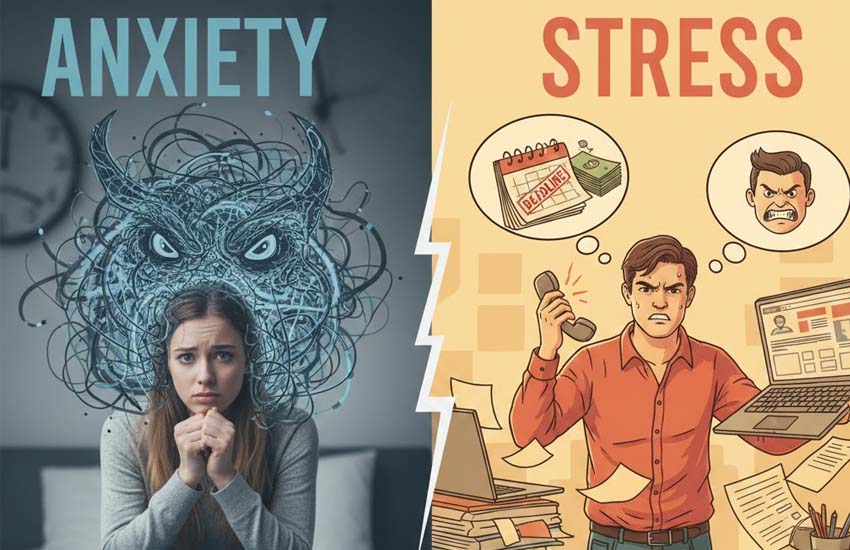
Is this stress, or is it anxiety?
Stress and anxiety both involve the body’s response to pressure or perceived threat. They can both include:
Because the experiences overlap, many people aren’t sure whether they’re dealing with temporary stress or ongoing anxiety.
Stress is typically a response to specific external pressures.
Stress often:
People experiencing stress often search for: natural ways to reduce stress, relaxation techniques, breathing exercises, stress management strategies.
In many cases, stress eases once the pressure passes.
Anxiety is often more internal and persistent.
Anxiety may:
People experiencing anxiety often search for: anxiety symptoms, anxiety treatment options, anxiety therapy, anxiety medication or natural remedies.
Anxiety can be present with or without stress—and sometimes develops after prolonged stress.
While stress and anxiety overlap, there are some helpful distinctions.
These differences are subtle, which is why many people feel unsure about what they’re experiencing.
Stress and anxiety are not separate boxes. Stress can sometimes shift into anxiety, especially when:
At this point, people often feel stuck between “this is just stress” and “something more is happening.”
Many people try to decide between stress and anxiety by:
The problem is:
This often leads to more searching, not more clarity.
Instead of asking “Is this stress or anxiety?”, it’s often more helpful to ask:
Looking at patterns over time gives a clearer picture than labels alone.
If you’re unsure whether you’re dealing with stress, anxiety, or a mix of both, a structured screening can help bring clarity.
A thoughtful anxiety screening tool looks at:
The focus is on understanding, not diagnosis.
A private, educational screening designed to explain anxiety and stress patterns clearly.
People often explore:
Understanding whether anxiety or stress is driving your experience can make these choices feel less overwhelming.
Clarity helps you:
It’s also important to know:
This is why understanding your current pattern matters more than finding a perfect label.
Whether what you’re experiencing is stress, anxiety, or a combination of both, understanding it clearly is often the first step toward feeling steadier.
Educational · Confidential · Free to Start