
They can both include:
- Racing heart
- Shortness of breath
- Chest tightness
- Dizziness or shakiness
- Intense worry or fear
Because symptoms overlap, many people assume panic attacks and anxiety attacks are the same — but they’re not exactly.
Finding Clarity...

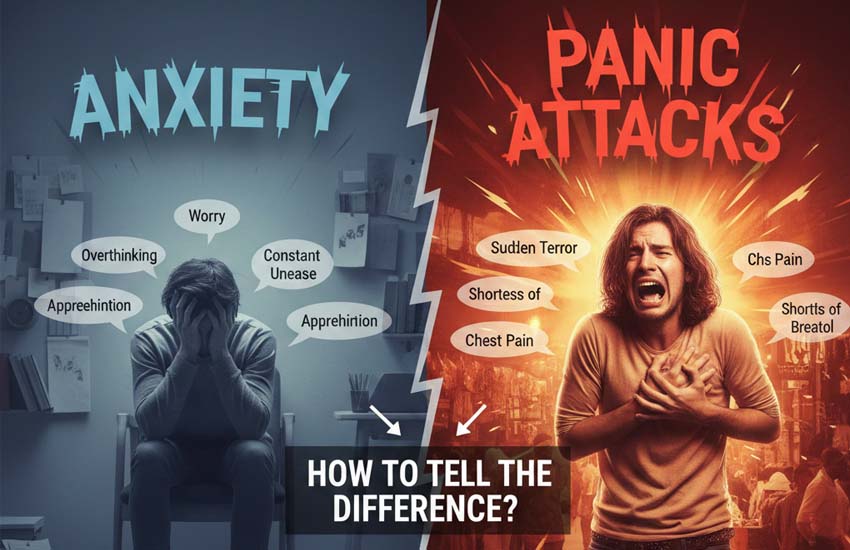
Many people who experience intense anxiety symptoms ask a frightening question:
Was that anxiety — or was it a panic attack?
Anxiety and panic both involve the body’s stress response.
They can both include:
Because symptoms overlap, many people assume panic attacks and anxiety attacks are the same — but they’re not exactly.
Anxiety is often ongoing and anticipatory.
It may:
Common anxiety symptoms include:
People experiencing anxiety often search for: anxiety symptoms, anxiety treatment, anxiety therapy, anxiety medication or natural remedies.
Panic attacks are typically sudden and intense.
They often:
Common panic attack symptoms include:
Because panic attacks feel intense, many people worry they are medical emergencies — which increases fear.
While anxiety and panic are related, there are important distinctions.
Understanding these differences can reduce fear when symptoms appear.
Yes.
Many people experience:
This overlap is why it’s often hard to label what’s happening in the moment.
Panic attacks activate the body’s fight-or-flight response strongly and suddenly.
This can make symptoms feel:
Even though panic attacks are not dangerous themselves, the experience can be deeply unsettling — especially without understanding what’s happening.
Many people try to understand panic vs anxiety by:
The problem is:
Understanding how often, how long, and in what context symptoms appear matters more than individual sensations.
Instead of focusing on what one episode felt like, clarity comes from looking at patterns such as:
Patterns give a more accurate picture than isolated moments.
If you’re unsure whether you’re experiencing anxiety, panic attacks, or a combination of both, a structured screening can help organize what you’re experiencing.
A thoughtful anxiety screening tool looks at:
The goal is understanding, not diagnosis.
A private, educational screening designed to explain anxiety and panic-related patterns clearly.
People often explore:
Understanding whether panic attacks, ongoing anxiety, or both are present can help make these choices feel less overwhelming and more informed.
Clarity reduces fear — especially after intense symptoms.
Experiencing panic-like symptoms can be frightening.
Not understanding them often makes the experience feel worse.
Understanding anxiety and panic patterns doesn’t replace professional care — but it helps you approach next steps with confidence rather than fear.
Educational · Confidential · Free to Start